© 2025 Jubail Specialist Hospital. All Rights Reserved Privacy Policy
Built and managed by Nusite IT LTD

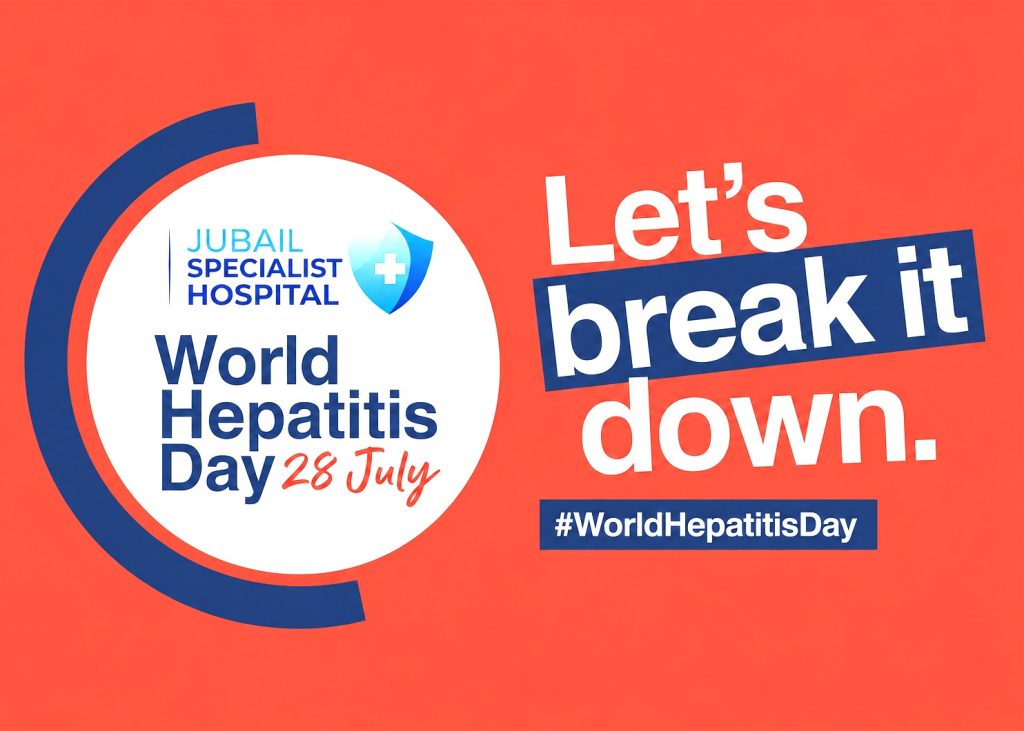
28 July marks World Hepatitis Day, a global campaign dedicated to raising awareness about viral hepatitis—a preventable and treatable disease that continues to affect millions of people worldwide.
This year’s theme, “Hepatitis: Let’s Break It Down,” challenges us to remove the barriers that prevent people from accessing life-saving prevention, testing, treatment, and care.
Why Hepatitis Matters
Viral hepatitis is an inflammation of the liver caused by different viruses, most commonly hepatitis A, B, C, D, and E. While some forms cause short-term illness, hepatitis B and C can become chronic infections, leading to serious complications such as liver cirrhosis, liver failure, and liver cancer.
The global burden remains enormous:
These numbers remind us that hepatitis remains a major public health challenge, but one that can be overcome.
The Good News: Hepatitis Can Be Prevented and Treated
Medical advances have given us powerful tools to fight viral hepatitis:
Early diagnosis is critical. Many people living with hepatitis have no symptoms for years and may unknowingly develop irreversible liver damage. Regular screening, especially for those at increased risk, can save lives.
Breaking Down the Barriers
Despite the availability of effective prevention and treatment, many people still face obstacles including:
Breaking these barriers requires education, stronger healthcare systems, and ensuring that everyone has access to affordable hepatitis services.
How You Can Protect Yourself
You can reduce your risk of viral hepatitis by:
Jubail Specialist Hospital Is Here for You
At Jubail Specialist Hospital, we are committed to promoting liver health through prevention, early detection, and comprehensive care. Our team provides hepatitis screening, vaccination, counselling, laboratory investigations, specialist consultation, and ongoing management for patients living with viral hepatitis.
This World Hepatitis Day, let us all commit to breaking down the barriers that prevent people from receiving the care they deserve. Together, we can reduce new infections, improve access to treatment, and move closer to a future free from viral hepatitis.
Know your status. Get vaccinated. Get tested. Get treated. Protect your liver. Protect your future.
Jubail Specialist Hospital – Quality Healthcare with Compassion.
